
Why Financial Materiality is like an IKEA chest of drawers
I am clearly emotionally scared from a weekend trip to IKEA. Because it suddenly occurred to me that measuring up for a chest of drawers is surprisingly like thinking about financial materiality.
Bear with me....
Our eldest moved into her university accommodation a few weekends ago. But she clearly needed a chest of drawers for her room. So off we dutifully went to the local IKEA, along with about three thousand other students and parents. Piece of furniture located, we found there were several options available.
Which size was right depended on who was asking the question. Was the depth right to fit all your clothes in (mother's question)? Was the width right to sit next to your desk (father's question)? Was the height right to put a mirror on top (student's question)?
Which reminded me of how the three key stakeholders ask about financial materiality.
Data-driven financial materiality
Over the summer, a group of reporters, investors and assurers have been working with researchers from Brunel University of London, UCL and Maxwell Data on a data-driven approach to financial materiality in sustainable investing. We held an industry workshop a few weeks ago to review a number of proof-of-concepts and to agree our new approach to this painful problem.
A key learning from the workshop is that there may be a single approach to the data gathering, curation and databasing but there are multiple use cases to analysing the data. To that end, we are now developing a beta product that is accessible via a standard LLM so the user can query the data to meet their use case.
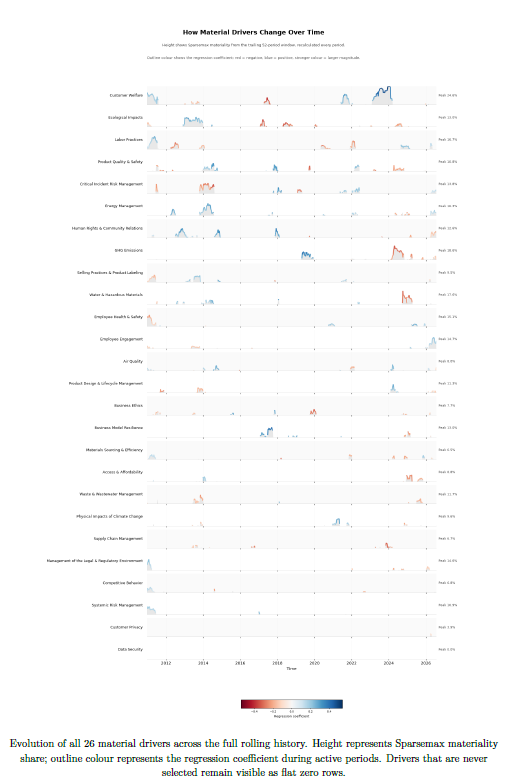
We take this approach because reporters said they want depth in their analysis to drill down to which IROs should be included and quantified. Whereas investors said they want width in their analysis to look across a portfolio and be able to understand current and emerging risks. And assurers said they want height in their analysis to investigate how dynamic materiality is across time.
Reporter example
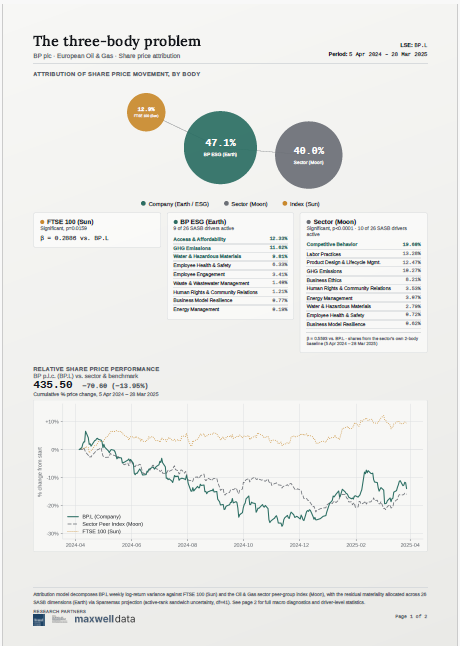
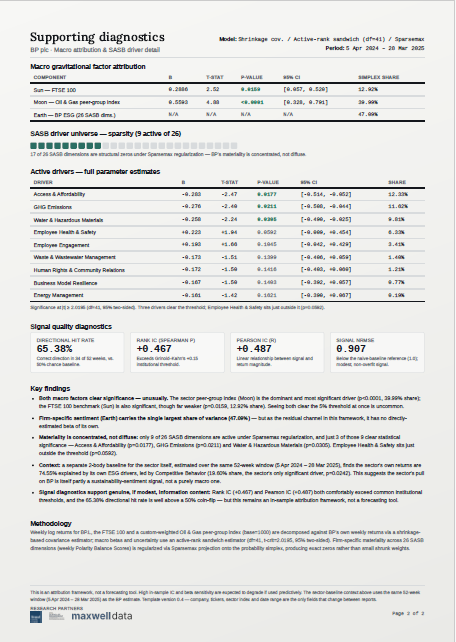
Taking BP, the oil and gas company, as a representative example. The kind of query a sustainability manager might ask:
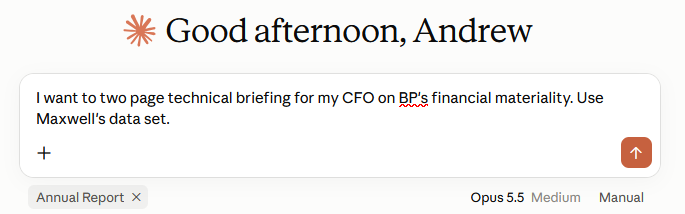
.... to which the output is:
Investor example
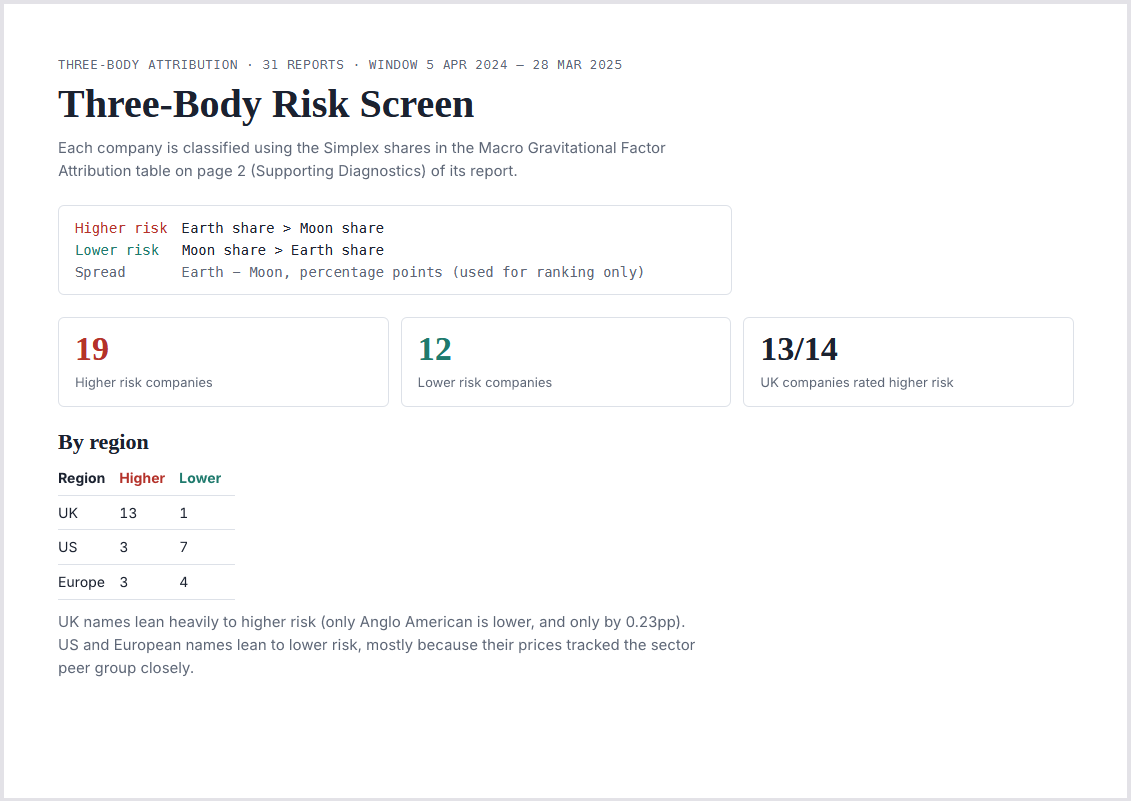
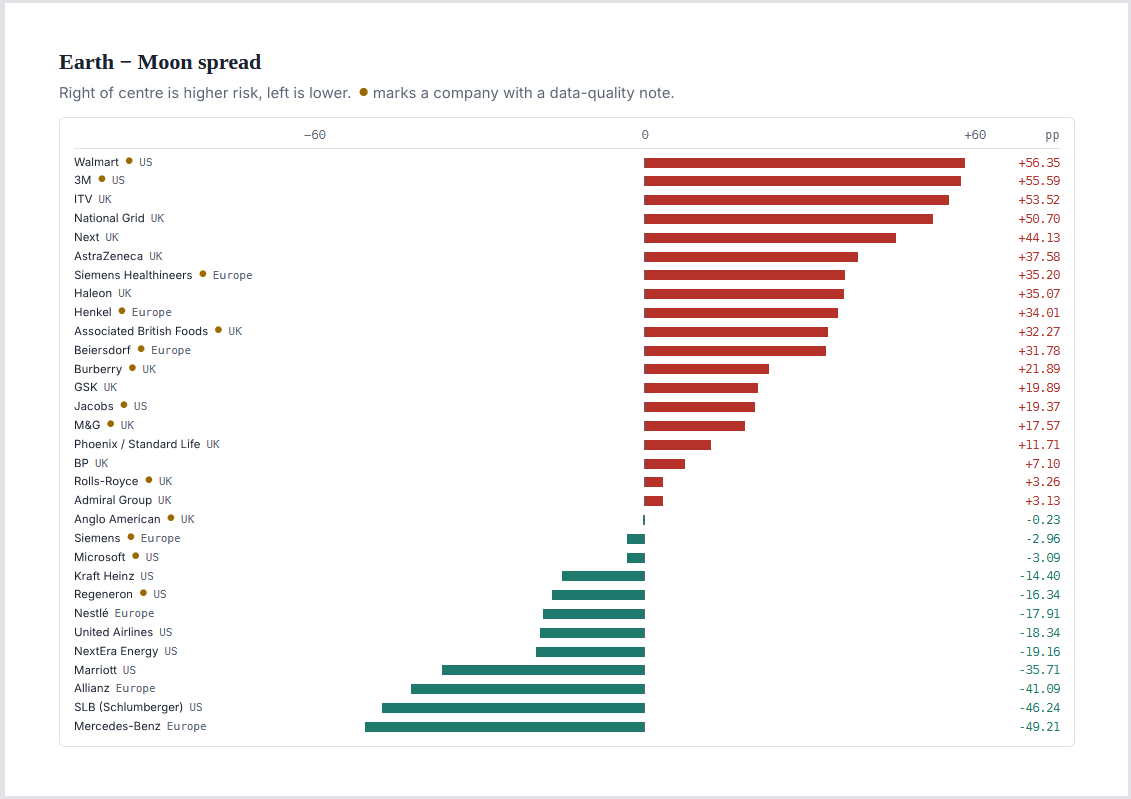
Taking a fictional portfolio of 31 UK, EU, and US big cap companies including BP, as a representative example. The kind of query a financial analyst might ask:
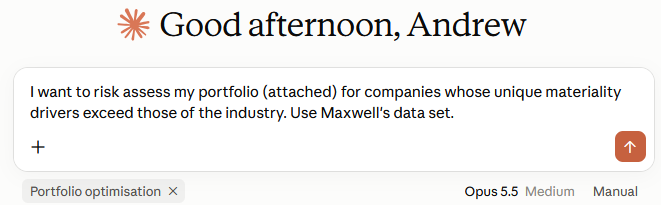
.... to which the output is:
Assurer example
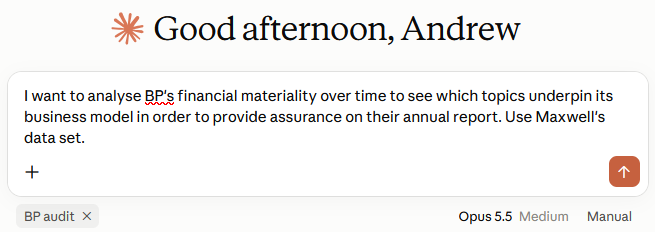
Returning to BP as a representative example. The kind of query an assurance manager might ask:
.... to which the output is:
Conclusion
I hope this hasn't induced an IKEA-style emotional scarring. But the analogy stands - financial materiality depends on the question you are asking. There's isn't a one-size-fits-all solution. So being able to query a common, robust, curated dataset to answer your business question is a useful way forward. If you would like to beta test this approach, please contact me directly.